My story

Une Forte LTD

Inktech
Freelance

EPAM Systems

Xsolla

ITMS


Therefore, the business has set an inspirational goal:
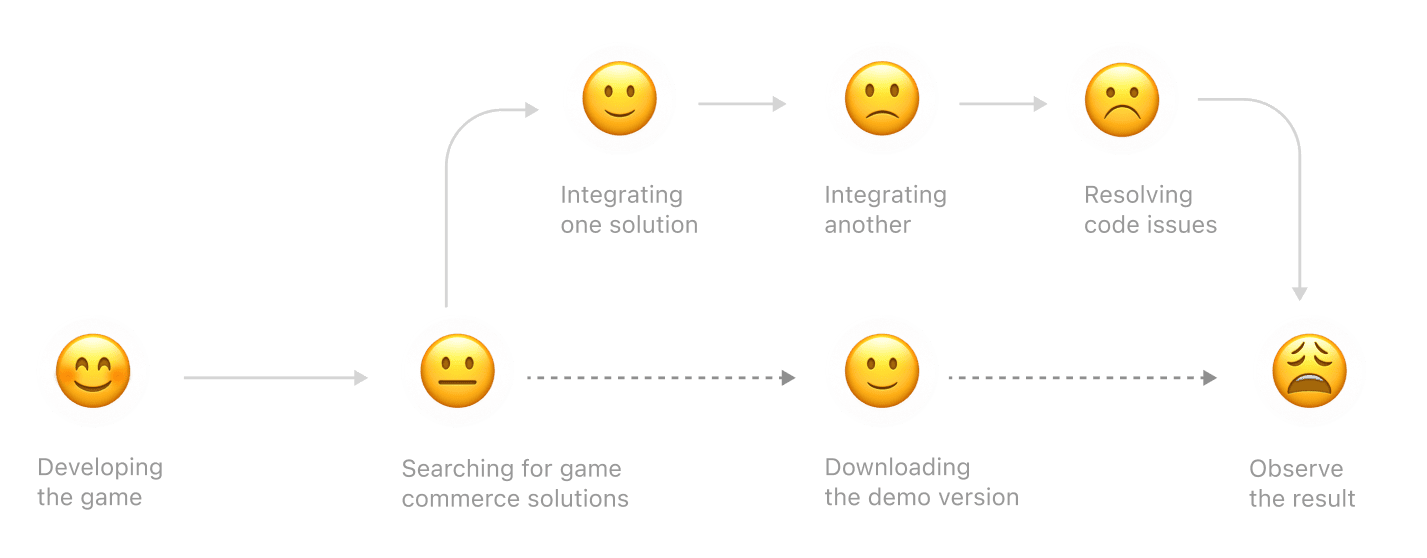
Working as a solo designer meant I had limited time to spend developing the Design System alongside other rapid UX work. The Design System had to scale fast, as I was discovering new use cases and constantly rethinking and expanding the library, so I had to approach this challenge strategically.
So by creating an updated centralized design system, I aimed to:
Brand perception through consistent designs that work across channels
A ready-made library for teams to create and test designs much faster
A structured and guided documentation on how to build Design CC product

To better understand the current state of our existing design ecosystem, I started with a UI Inventory of our interface components. I conducted a 1-week audit and prepared the full list of elements and their usage across the product. Next week I've organized a number of prototype usability studies, as well as other discovery exercises. These helped me to drive the development of the component library and interaction patterns.


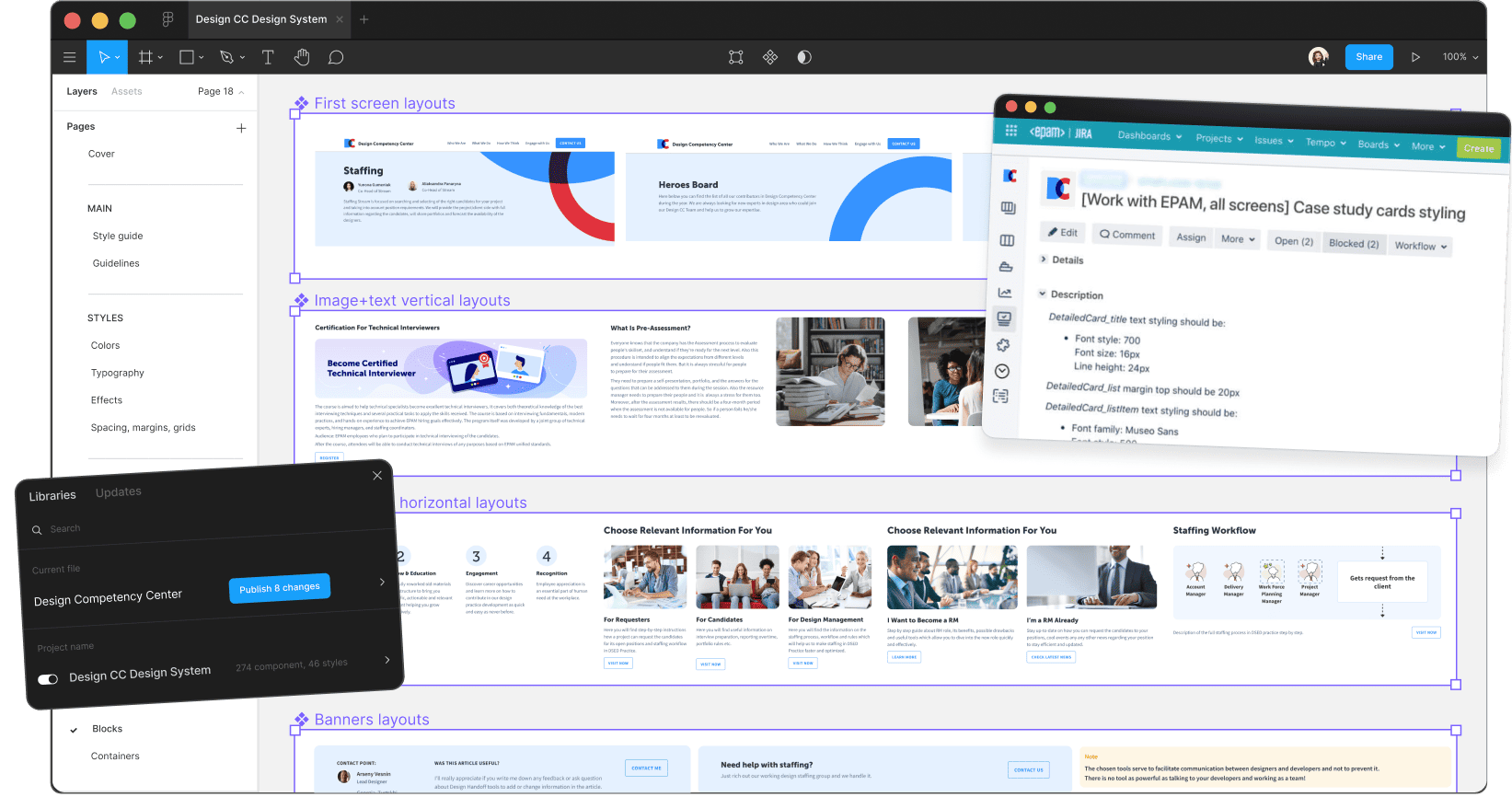
Once I set up the components into reusable combinations of that address common user objectives with sequences and flows, I started to create variations on each component layout variations such as image left, content right or vice versa.

Each component received stepped interaction examples so that expected interactive states are clearly communicated. These are paired with detailed specifications around tab stops, keyboard control requirements, spacing, atom and molecular elements.
Every component is further refined for additional breakpoints as well as minimal and maximum content specifications. This allows for content authors to know the maximum or minimum amount of content any given component can contain.
Patterns are used to show reusable combinations of components that address common user objectives with sequences and flows. These were developed in consideration of our global market rollout approach. While not every possible pattern was developed, this documentation served as the basis for our customers most common needs.


Therefore, the business has set an inspirational goal:
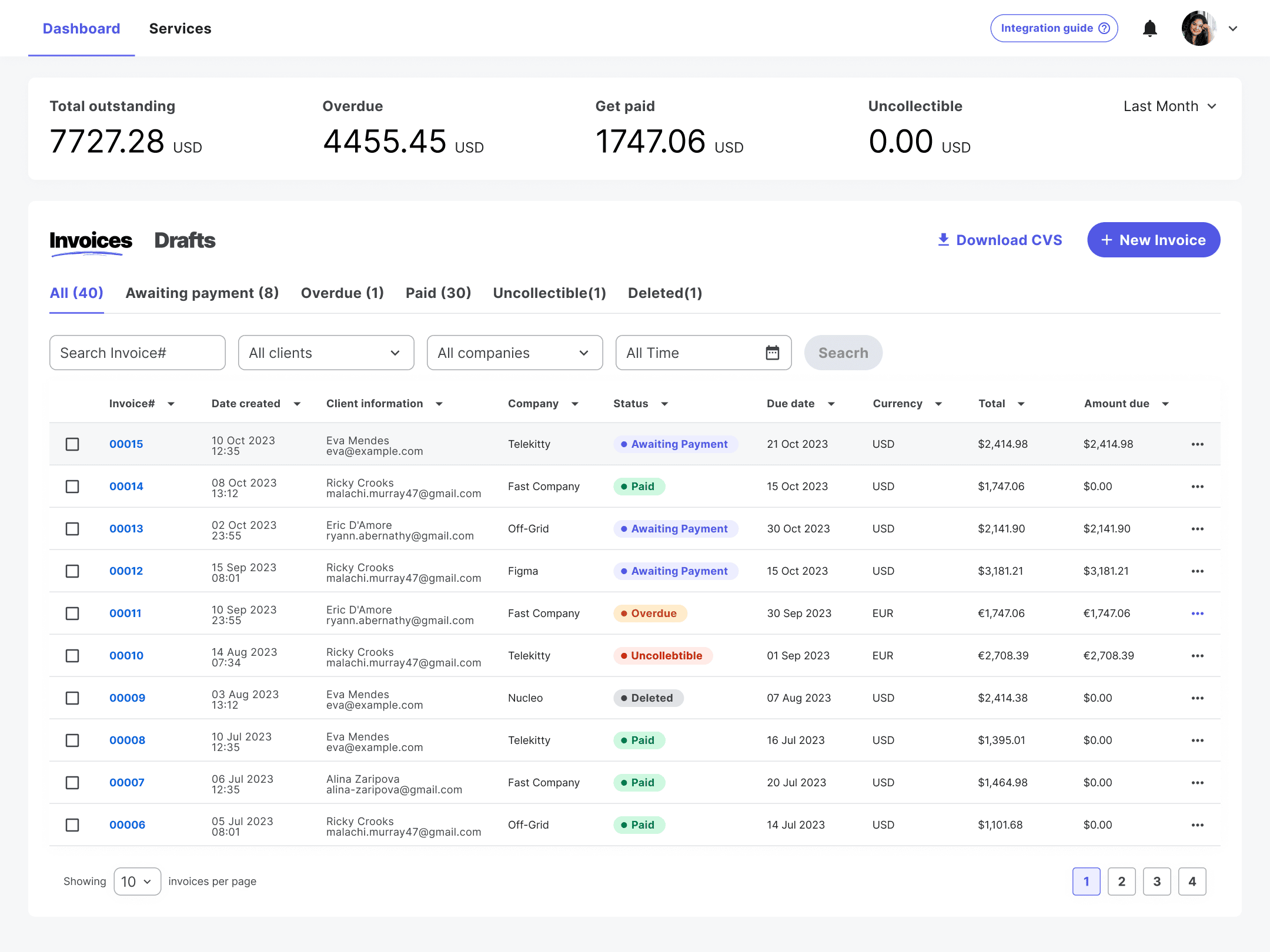
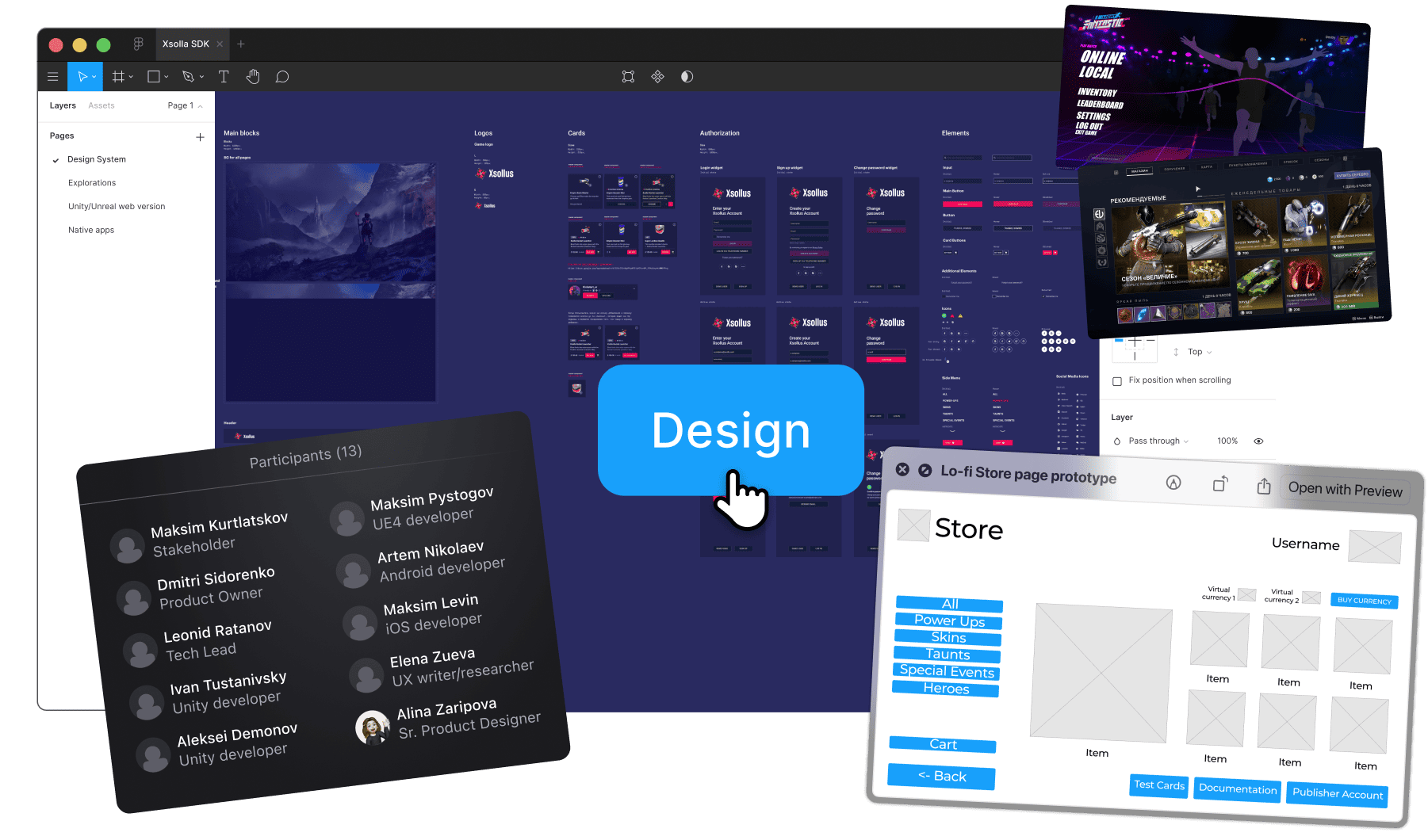
I worked with cross-functional team, consisting of:a stakeholder, a Product Owner, a Project Manager, 6 developers, 2 testers, an UX writer and an UX researcher.
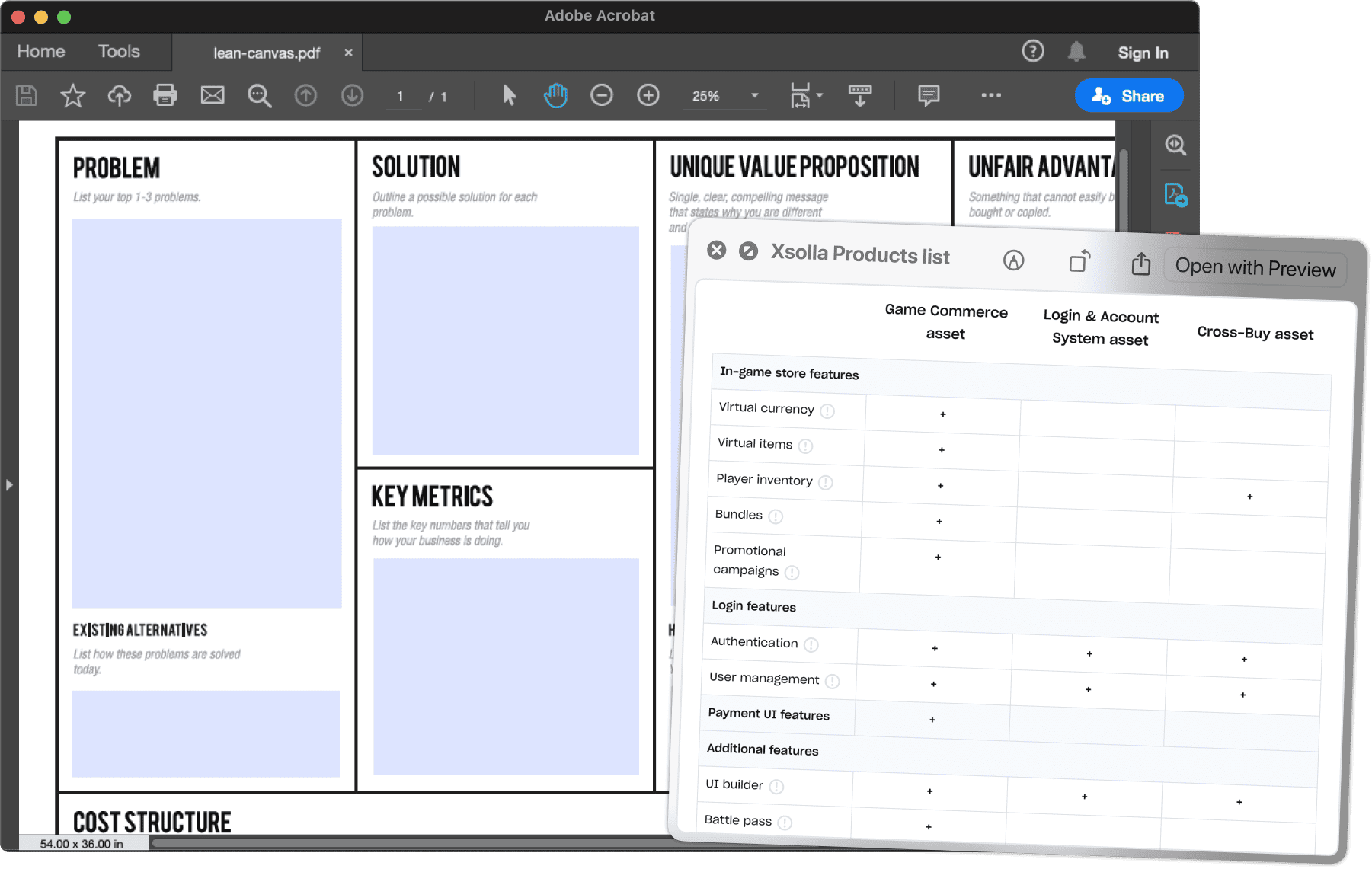
It was crucial to clarify and document the current problems, value propositions, metrics, and user needs. Lean canvas helped me, a stakeholder and the team to deconstruct the business goal into the key assumptions.


.png)

56.1% stated they see better use in accent color only for main buttons, and not every clickable elements.

out
of
have 3rd-party
integrations

The team was on a tight deadline and developers needed to start building soon.
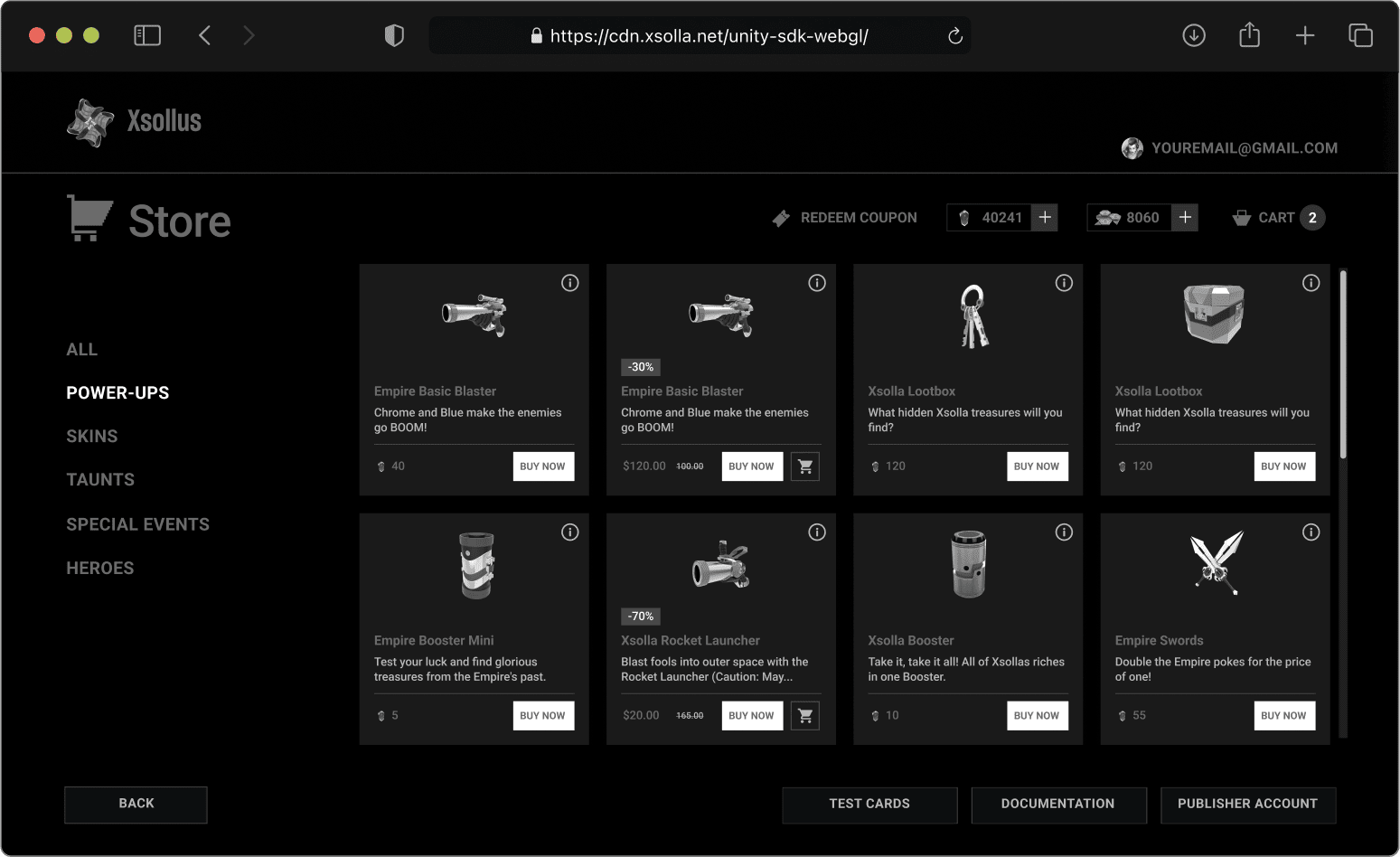
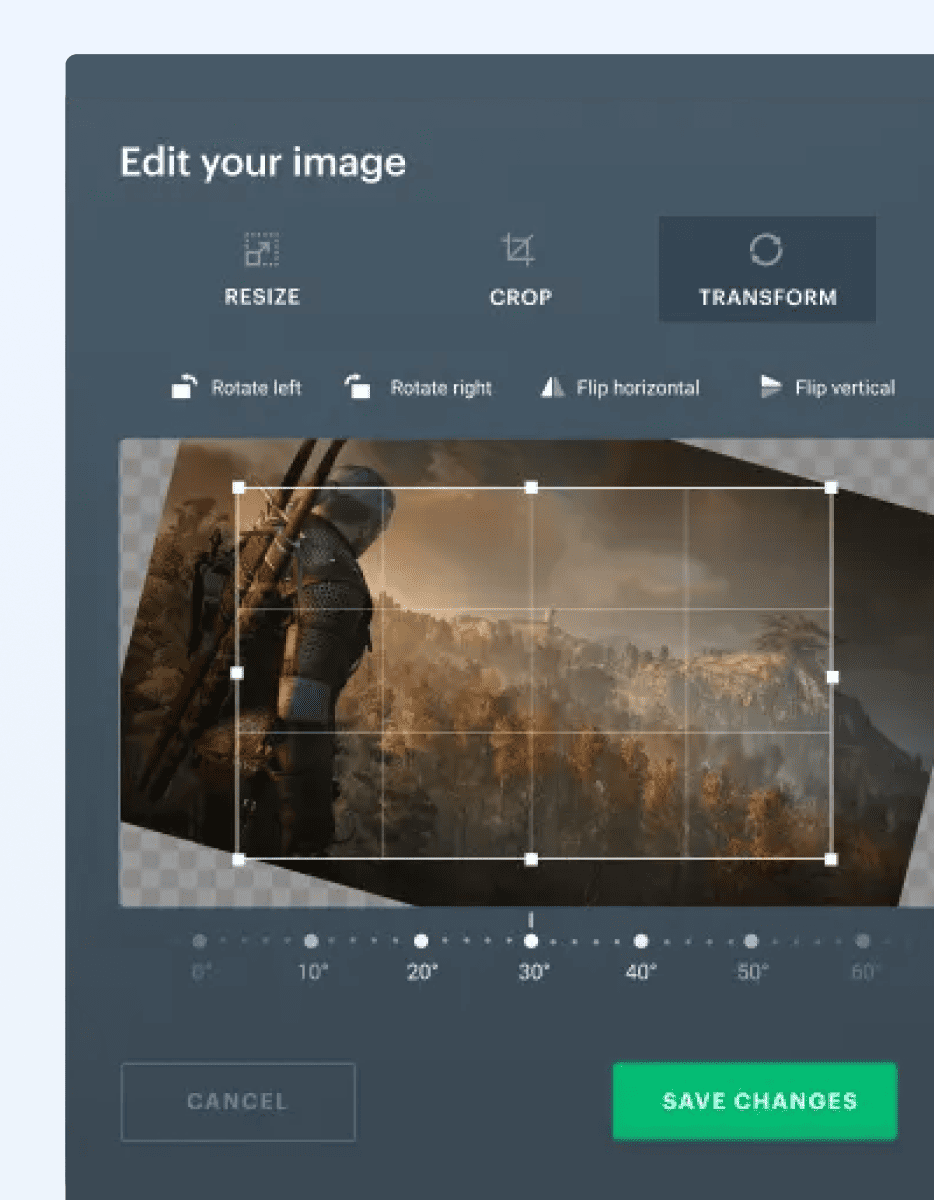
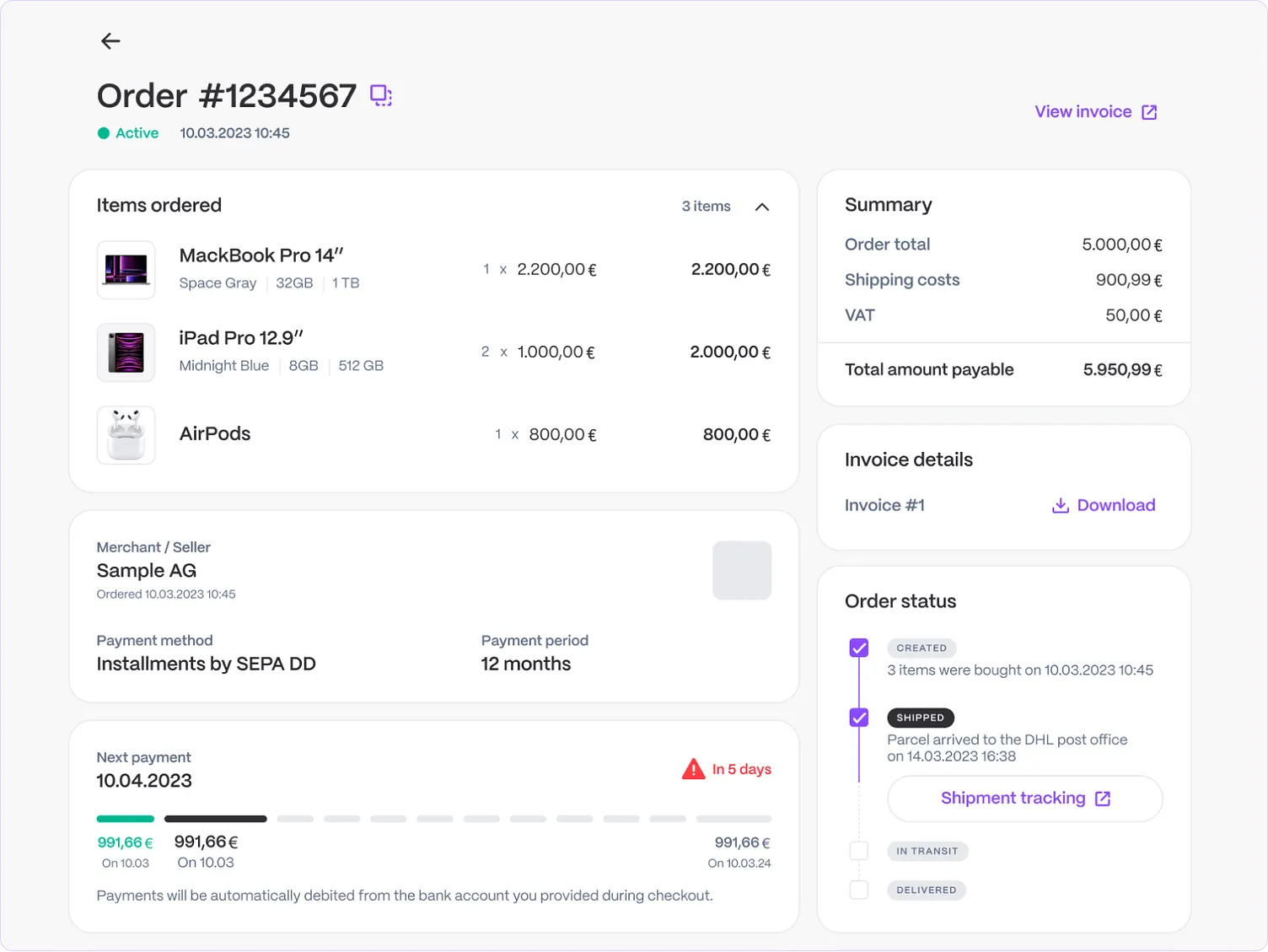
I’ve started working on the executing UI design changes: fonts, icons, products images, layouts and style guide update. Then UX screens were composed using UI Kit components in Xsolla Figma account.

I decided to keep the layout in old school — as a standard set of grids with breakpoints, ensuring we could design and build quickly and consistently both the desktop and adaptive mobile versions: horizontal and portrait later on.


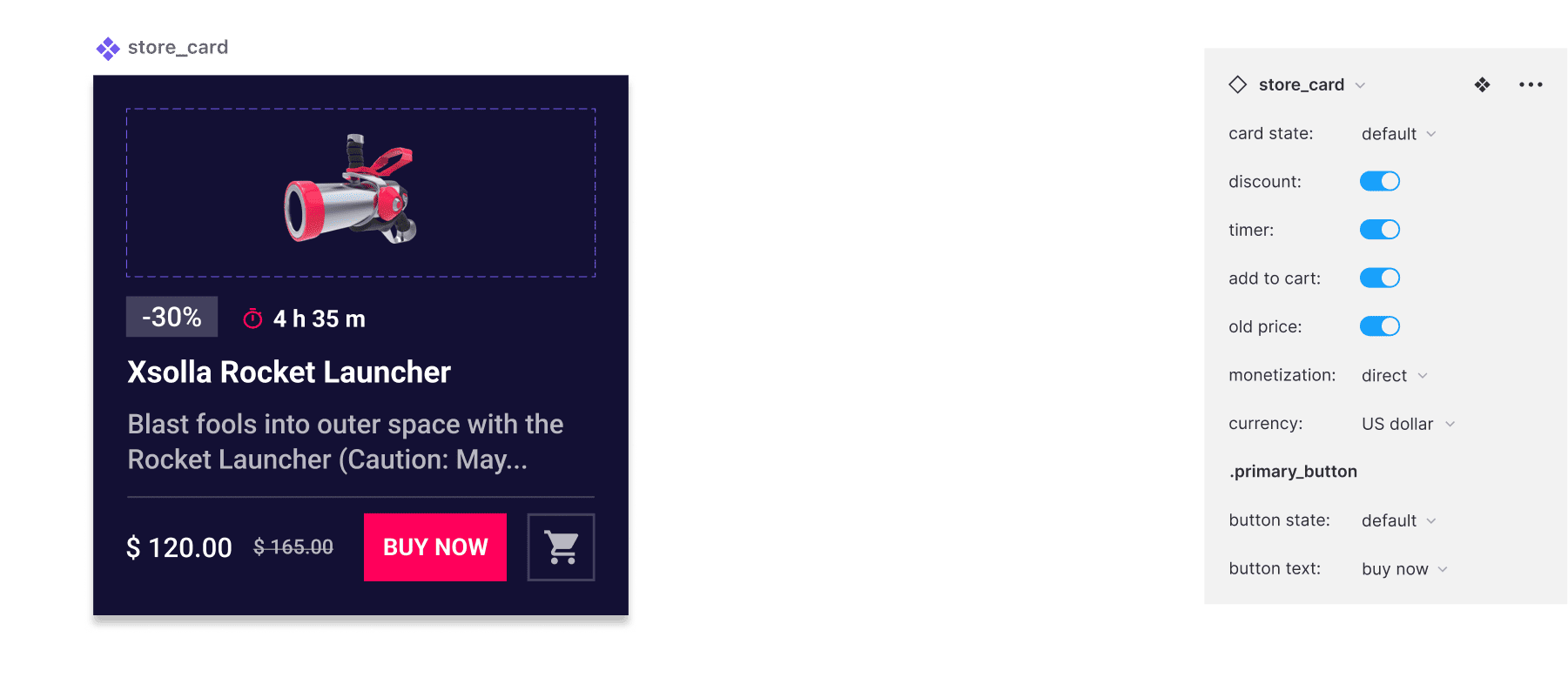
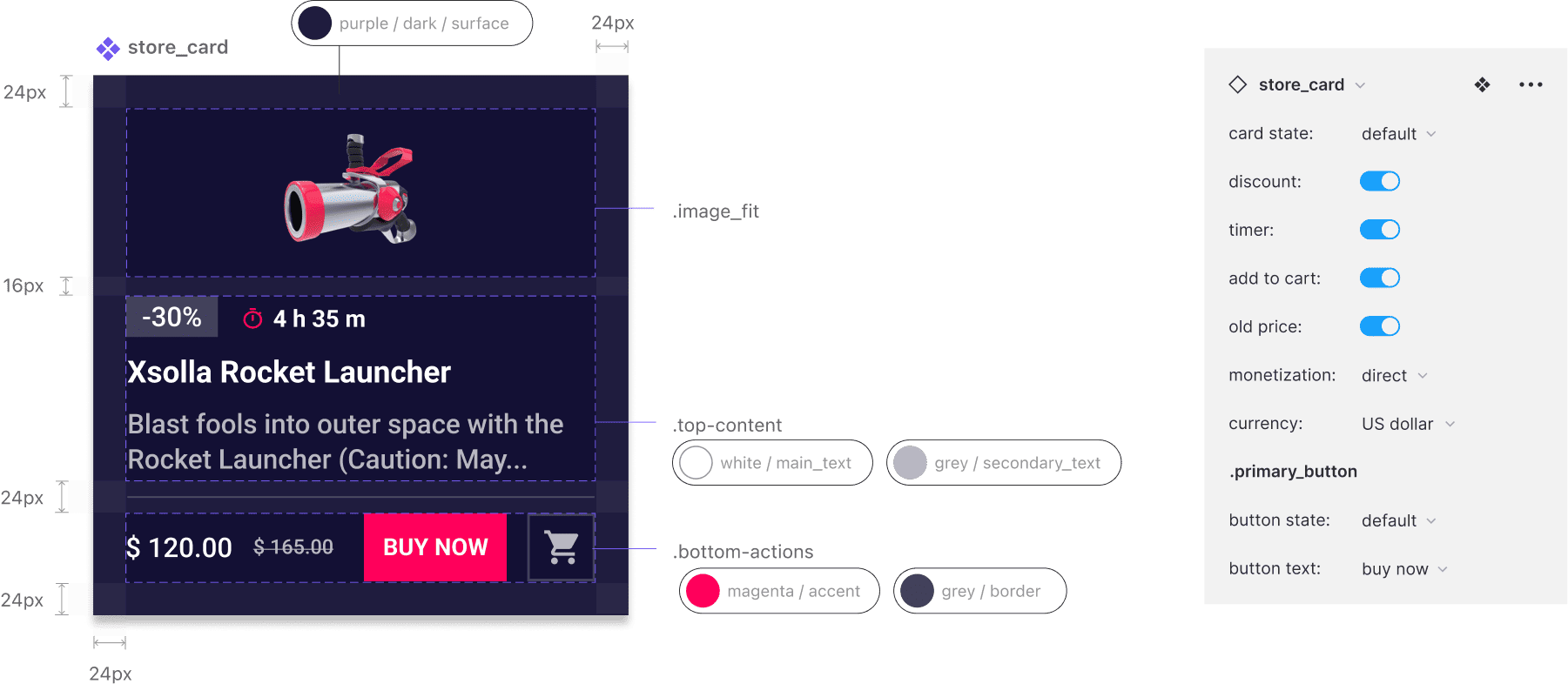
The card component was highly-critical from a content-organization perspective. It was designed to prioritize readability while accounting for responsiveness and flexibility.
I also put a lot of emphasis on documenting design spec to foster smooth design-engineering collaboration. It was also an opportunity to leverage Figma’s new component properties functionalities to greatly speed up the future design process of other features/pages.
In the second week of the design sprint, I formed the new concept according the research insights and best practices.

To quickly enable easy-to-use, localized, one-click authentication for the players while keeping their data secure, compliant, and under your control we provide: OAuth 2.0 protocol-based authentication, classic login via username/email and password, via social medias or a one-time code or a link sent via SMS or email.

Our SDK provides user attributes to manage additional information, cross-platform account linking, as well as the secured Xsolla storage for user data. Alternatively, devs can connect PlayFab, Firebase, or their own custom storage.

To experience all types of monetization options, SDK provides a battle pass - an approach that provides additional content for a game usually through a tiered system, rewarding the player with in-game items for playing the game by completing challenges.

In March 2019, I started to assemble the adaptive design for horizontal and landscape mobile layouts.
As previously I've developed the design system for Desktop version, keeping the principles of adaptive design by Figma library with components and variants, this allowed me to build the both version very quickly, and what was planned for 6 months was done in 2.

I created Figma prototypes to present demo version of our modular solution, in which users can test examples of product integrations from login to transactions. I observed the replays of 7 user journeys, getting behavioral insights that helped me to pinpoint issues, which otherwise would be difficult to notice.
For example, I’ve added 4 onboarding screens, as only 2 users went to “HELP” section from side menu to read overview.

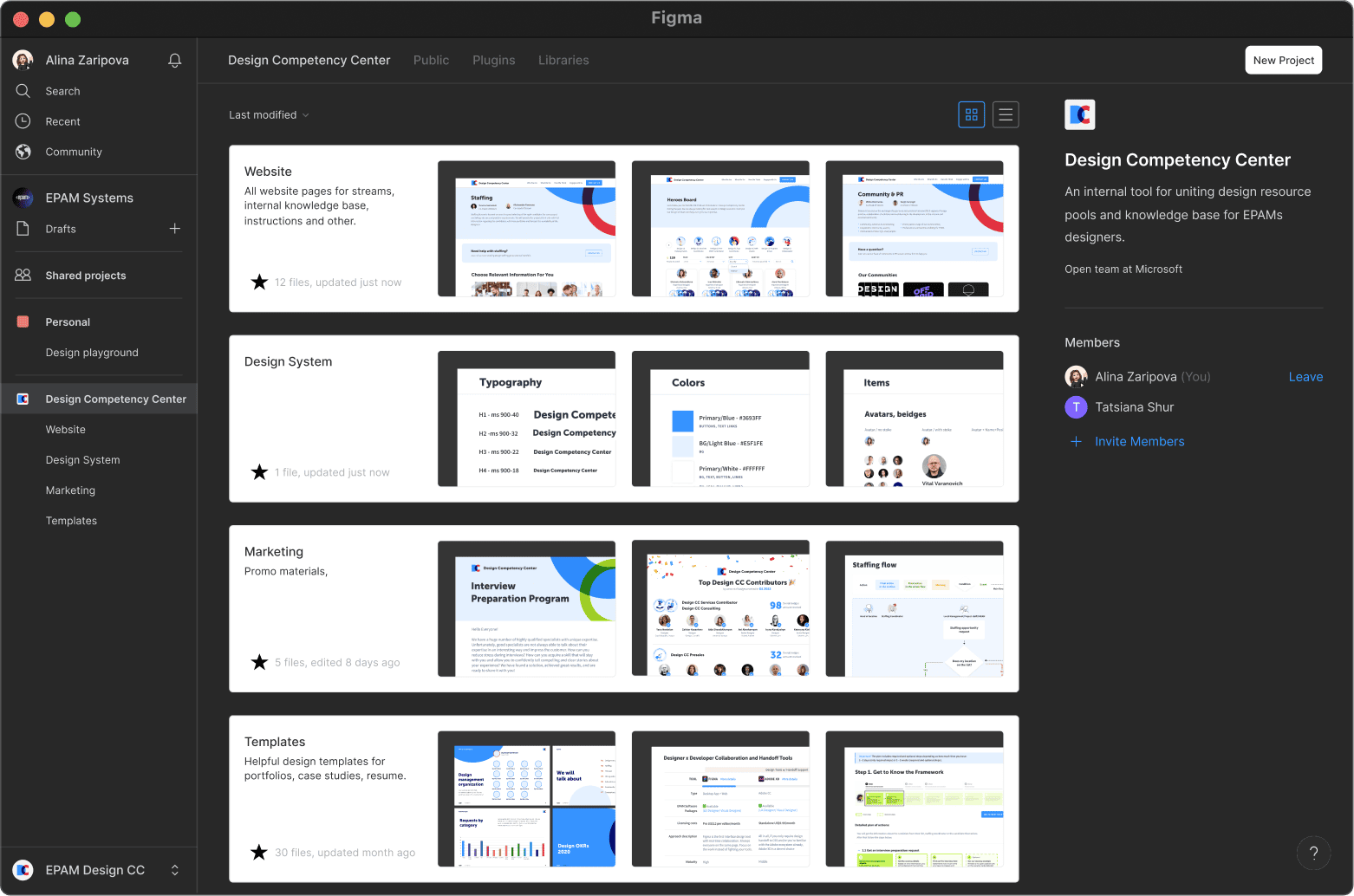
After the desktop version launch, I started to prepare the handy and detailed documentation on the design system for future designers and developers to continue working on the product. Since May 2019, I created and maintained a large-scale component library from scratch with established rules and standards, according to the Xsolla brand guidelines.
In September 2020, we launched all the products to the market, including the native mobile applications, while the desktop web version was constantly refined and enhanced within next releases. Xsolla SDK had more than 2k installations.


15+ projects in many domains.
Worked both with B2B and B2C products.


.gif)

Design is not just what it looks like and feels like.
Design is how
it works.


With 7 years of experience, I help companies create products with high-quality experiences and user‑friendly interfaces.
Building cohesive and scalable systems with precision and care.
Designing user-friendly interfaces for desktop and mobile devices.
Heading strategic initiatives, bridging between design and code, and cross-team collaborating.
Helping people in their professional and personal development.